scroll
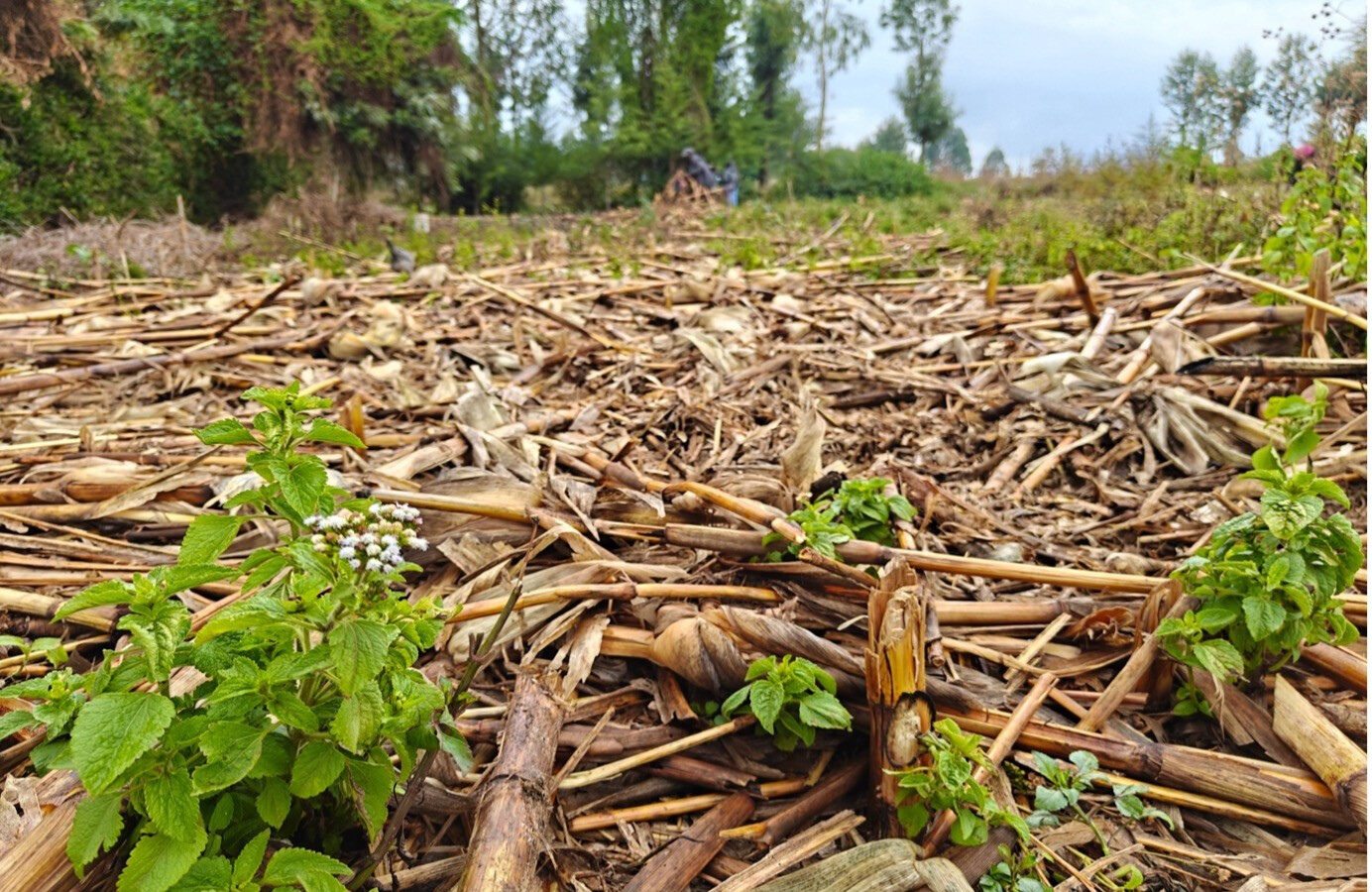
This article draws from on-the-ground experience and what we are learning alongside thousands of farmers who are adopting composting, residue retention, and cover cropping as part of a broader shift toward regenerative agriculture and carbon farming.
Across Kenya’s smallholder farming systems, soil fertility is declining, input costs are rising, and weather patterns are becoming more erratic. Restoring soil health is one of the clearest ways to improve productivity, strengthen resilience, and support household food security. Three practical practices are central to that effort: composting, residue retention, and cover cropping.
Together, these practices help rebuild soil health, support more stable yields, and create measurable climate benefits. They are accessible, practical, and increasingly relevant for farmers looking to improve performance under more difficult growing conditions.
Conventional farming practices often leave soils bare between crops, burn crop residues, or fail to recycle organic waste. Over time, these practices weaken soil structure, reduce microbial activity, lower water retention, and deplete essential nutrients. The result is a growing dependence on chemical fertilizers that are becoming harder for many farmers to afford.
We have seen this firsthand working with farmers across Kenya. Fields with depleted soils struggle to hold moisture, and yields can remain inconsistent even when rainfall is adequate.
Composting, residue retention, and cover cropping offer a different path. Composting turns organic waste into nutrient-rich material that feeds the soil and reduces reliance on synthetic inputs. Residue retention keeps crop stalks and leaves on the field, where they help protect soil from erosion, conserve moisture, and gradually return carbon and nutrients. Cover cropping introduces plants such as mucuna, beans, and barley between main crops to fix nitrogen, suppress weeds, reduce erosion, and build organic matter over time.
Used together, these practices can restore fertility while making farming systems more resilient to both drought and heavy rainfall.
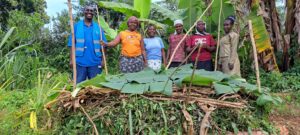
Farmers in Kakamega during a training session on heap compost making and soil health practices.
From our work with farmers across Kenya, three practical advantages stand out.
Large areas of farmland across Kenya have been cultivated intensively and have lost much of their original fertility. Composting and cover cropping can help rebuild soil organic matter, especially when combined with residue retention. Beyond carbon gains, these practices improve nutrient availability and help soils become more productive and resilient over time.
Residue retention and cover cropping help soils hold water during dry spells, which is especially important in arid and semi-arid regions across the country. In Tharaka Nithi County, field experience has shown that farms practicing residue retention can improve soil moisture retention, supporting crop survival and reducing irrigation needs during periods of stress.
Using compost, crop residues, and cover crops can reduce reliance on chemical fertilizers and herbicides, lowering input costs. Over time, healthier soils can support more stable yields and reduce financial risk, while carbon finance can create an additional income stream that rewards long-term stewardship.
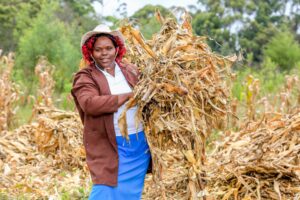
Martha Muthoni, a farmer in Meru, is seen carrying crop residue, which she uses for improved soil health management.
The value of these practices is visible in the field. They can improve soil fertility and organic matter, increase water retention, reduce erosion, strengthen soil structure, lower input costs, and support more stable crop yields. They can also build soil carbon in ways that may generate income through verified carbon programs.
Farmers from Elgeyo Marakwet to Narok to Mumias consistently report that, once they adopt these practices, their soils look, feel, and perform differently. We have stood with farmers in these fields and seen the moment when improved soil health becomes tangible.
Three elements stand out from our work with farmers across Kenya.
Farmers need practical guidance on how to produce high-quality compost, select suitable cover crops, and integrate residue retention into different cropping systems and local contexts.
Simple composting infrastructure, cover crop seeds, and tools for managing residues need to be locally available and affordable.
High-integrity soil carbon programs can provide farmers with additional rewards, helping incentivize adoption and support long-term soil stewardship.
When we met Jerald M’Mtunga in February, he described how his potato fields had been struggling with degraded soils and low nutrient levels. By adopting composting, residue retention, and cover cropping, he has rebuilt soil health while reducing fertilizer costs.
Within two seasons, Jerald’s potato yields increased from 20 bags to 50 bags. His soil now retains water better during dry spells, and cover crops help suppress weeds naturally. For Jerald, these practices are not abstract climate solutions. They are practical tools to restore his land and strengthen his family’s livelihood.
Jerald told us, “Using composted manure has helped me cut back on synthetic fertilizers while improving my soil structure with longer-lasting benefits.”
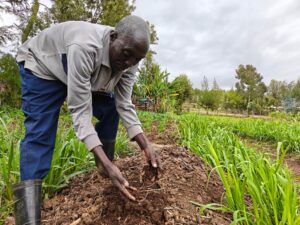
Jerald M’Mtunga tending to his soil.
Practices such as composting, residue retention, and cover cropping can deliver meaningful benefits at multiple levels. In Kenya, they can help restore degraded soils and improve resilience to increasingly unpredictable weather. For farmers, they can reduce dependence on costly inputs, support productivity, and create an additional income stream through carbon finance. More broadly, they can strengthen soil carbon stocks as part of a scalable climate solution rooted in agricultural improvement.
Learn more about our East Africa Carbon Farming Project. Interested in supporting regenerative farming through high integrity carbon removals? Talk to our team.



COMPANY
CLIMATE SOLUTION







