scroll
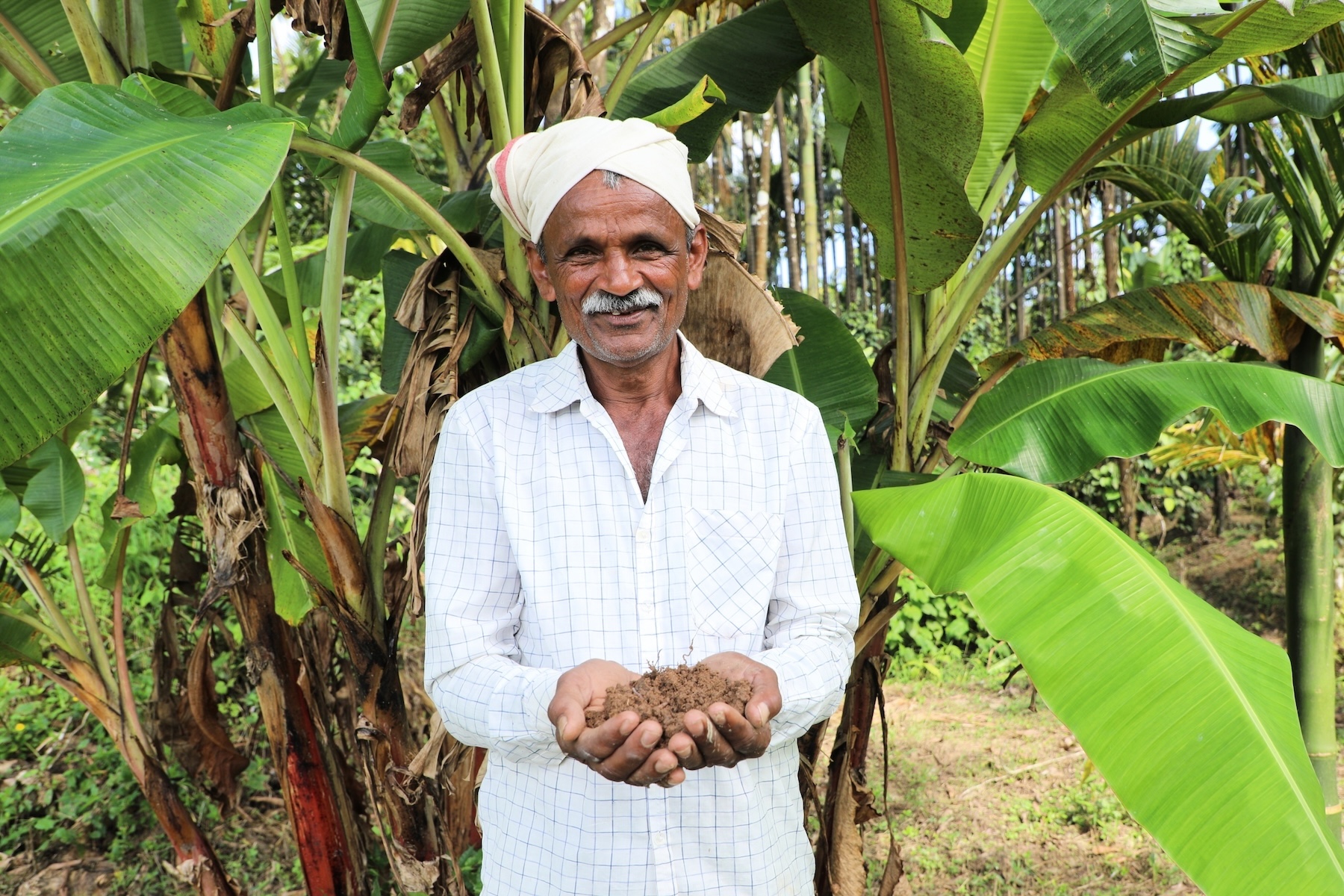
On 4 acres in Basavani Kupalli, Theerthahalli Taluk, Karnataka, smallholder farmer Ravi is improving the land he wants to pass on to his children and grandchildren.
“Farming is my passion,” he told us. “We leave behind only land, so we have to leave healthy soil for future generations.”
Ravi is a participant in Boomitra’s URVARA carbon farming project in India, where farmers adopt regenerative practices that rebuild soil health, increase resilience to climate change, and remove carbon from the atmosphere. His story is one of persistence, sacrifice, and foresight.
Ravi was born into a poor family that owned 2 acres of land. Farming was part of daily life, but it was never easy. He studied up to the 8th standard in Basavani before leaving for Solapur, Maharashtra, where he learned cushioning work for sofas and furniture.
For eight years, he worked in Solapur, earning a steady income but living far from his parents and siblings. Eventually, he returned to his village to get married—but with only 2 acres, agriculture alone could not support his growing family. Determined to both provide and continue farming, Ravi made a difficult choice. He went to the Middle East to work as a cushioner, spending seven years abroad. The work was demanding, but his goal was clear: save enough to buy more land back home.
When he finally returned to India, he used his savings to purchase an additional 2 acres, bringing his total holding to 4 acres. He could have moved to Mumbai to earn more in his trade. Instead, he chose to stay in his village—with his parents, siblings, and their families—and pursue agriculture full time.
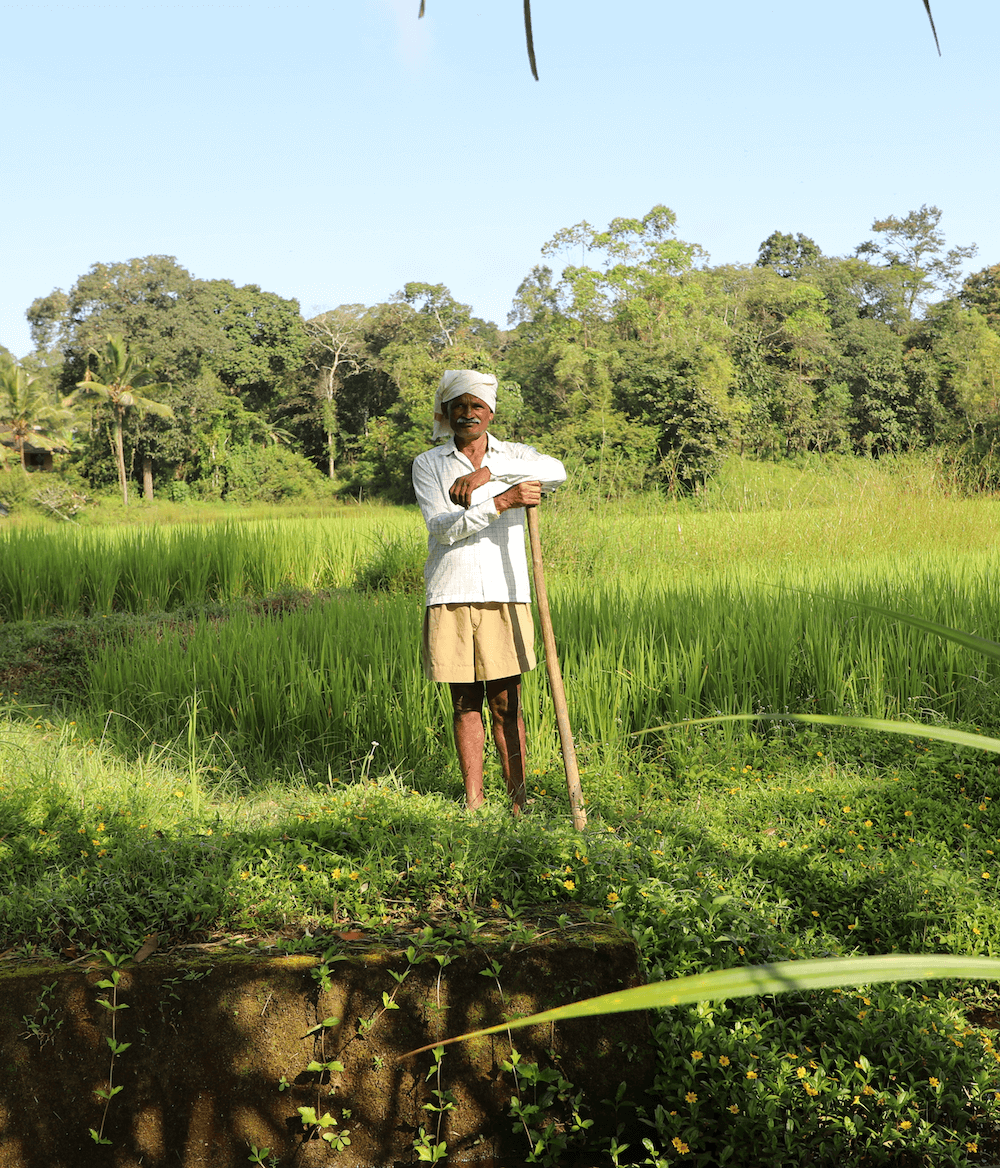
Now, Ravi’s days start early. He tends to his 2 cows and 8 buffaloes, making sure the shed is clean and the animals are fed. He grows paddy and arecanut and keeps a close eye on his crops—checking moisture in the soil, scouting for pests and diseases, and carrying out whatever work the season demands. In the evenings, he comes home to his joint family.
Like many farmers in his region, Ravi once relied on chemical fertilizers. Over time, he began to see the toll on his soil: the structure was breaking down, compaction was increasing, and the land felt “tired.” Through Boomitra’s local implementation partners, he was introduced to regenerative practices that prioritize long-term soil health over short-term yield spikes. He now consistently applies organic manure, minimizes tillage, mulches with crop residue, and plants cover crops.
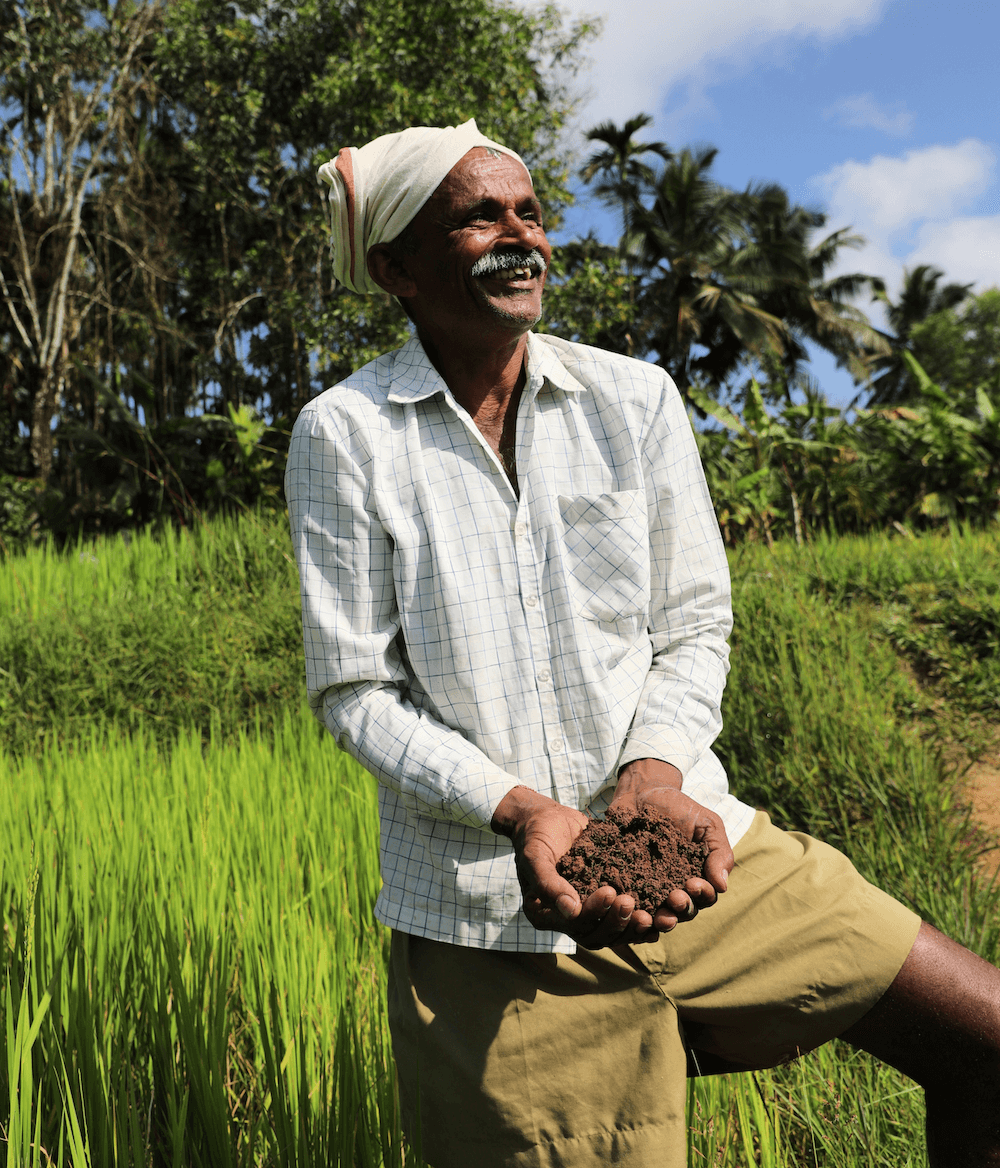
Season by season, the difference became obvious. The soil grew lighter and held moisture more effectively. His crops stayed greener and healthier for longer. Earthworms returned in large numbers, and the reduction in compaction made it easier for roots to spread and access water and nutrients. Ravi has a simple test to judge soil quality: darker soil is more fertile; soft, crumbly structure means the soil is alive and healthy.
Today, his farm is known locally for being exceptionally well maintained, and fellow farmers often remark on how clean and healthy his fields look. Since adopting regenerative practices, his yields have risen by 8-10% depending on the year. By cutting out chemical inputs entirely, he now saves at least 15,000 INR each year (about 167 USD). Some still advise him to use inorganic fertilizers to push yields even higher. Ravi listens, but he doesn’t bend. His yields are stable and competitive—on par with, or better than, many farmers around him—and, for Ravi, that is enough.
“I do not want unsustainable yields. I want to save my soil for the future.”
Around his fields, wildlife is a constant presence: wild bison, Red Malabar squirrels, rabbits, peacocks, mongooses, foxes, and wild hens are often seen near the farm. For Ravi, these animals are a reminder that his land is part of a wider living ecosystem.
Ravi doesn’t speak about carbon credits or tons of CO₂. What he talks about is soil, food, and family.
“We have to eat what we grow,” he says. For him, that means food grown on healthy land without harmful chemicals.
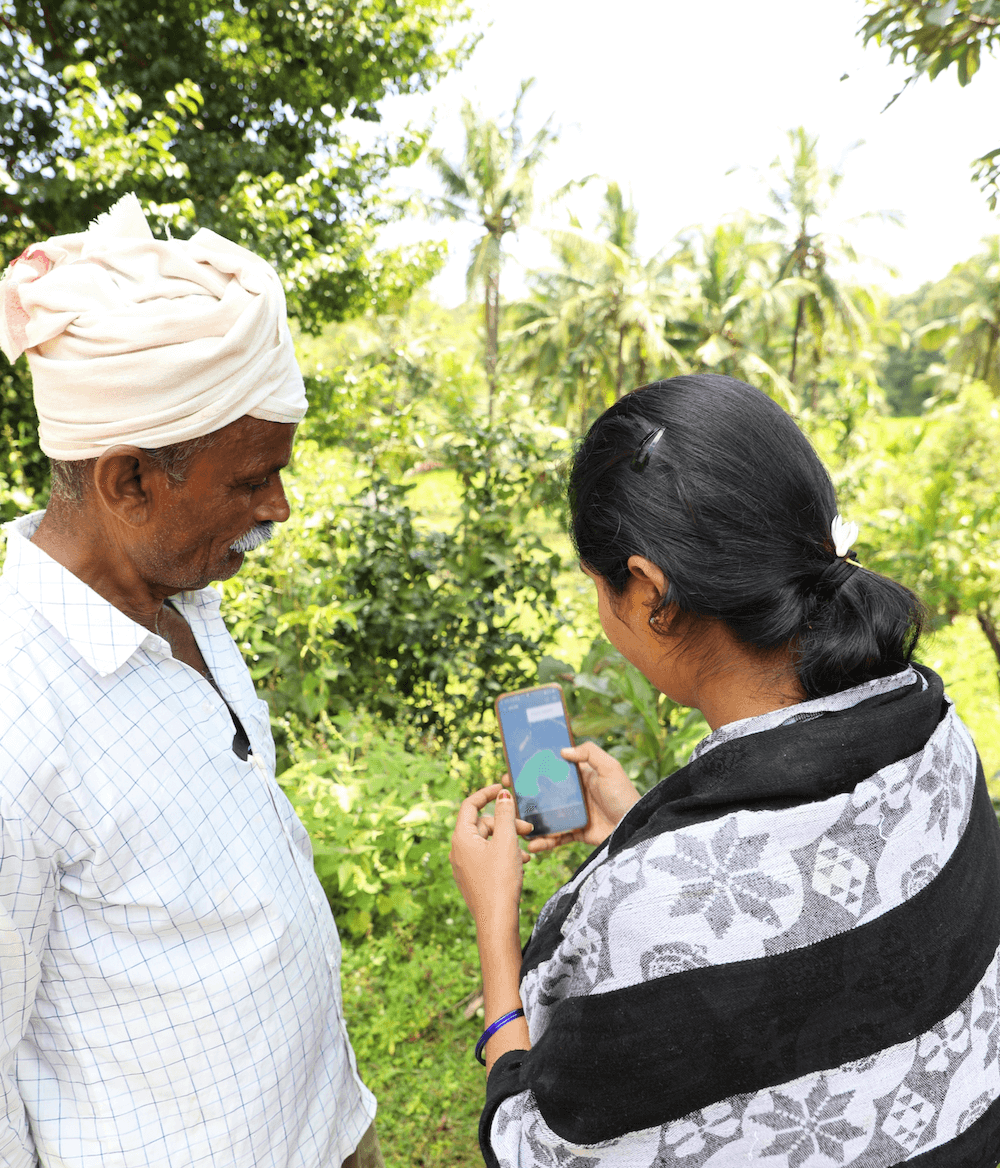
But the regenerative practices he follows do more than sustain his family with safe, nutritious food. They also store more carbon in the soil, pulling it from the atmosphere and locking it into living systems. Between 2021 and 2024, Ravi stored an additional 2.38 tonnes of CO2e in his soil. Through Boomitra’s URVARA project, farmers like Ravi are supported in adopting carbon-sequestering practices at scale. Their improved soil management generates verified soil carbon credits, creating an additional income stream while delivering measurable, lasting climate benefits. The same decisions that bring more earthworms into Ravi’s fields also help stabilize the climate for communities far beyond his village.
By building his soil organic carbon levels, Ravi’s fields hold more water during dry spells and drain better during heavy rains. Stronger, healthier plants are more resilient to pest attacks. Regenerative agriculture has become his frontline response to a changing climate.
When asked what makes him happiest in agriculture, Ravi doesn’t hesitate: growing and especially harvesting crops brings him immense joy and fulfillment.
Looking ahead, his plans are grounded. He wants to keep farming for the rest of his life. He hopes to diversify by planting coconut trees along the borders of his fields and intercropping with cashew—both to increase income and to keep the land covered, protected, and productive.
When neighboring farmers ask for his advice, Ravi is straightforward. He tells them to start with organic manure because it is the foundation of everything else; to focus on regenerative practices that build soil, not just yields; to remember that their responsibility is to save soil for future generations; and to eat what you grow.
Through the way he stewards his land, Ravi is feeding his family and community, quietly helping cushion the world from climate risk, and inspiring his neighbors to do the same.
The URVARA project—named after the Sanskrit word for “fertile” and short for Unlocking Resilience through Vital Agricultural Regeneration and Adaptation—is Boomitra’s flagship smallholder initiative in India. Its first issuance delivered 47,311 independently verified soil carbon credits generated by more than 6,000 smallholder farmers across roughly 25,000 acres. URVARA has already grown to support more than 12,000 farmers on nearly 50,000 acres across six states and is expected to generate over 315,000 credits over its 20-year lifetime. It is the first project in India to issue credits under the Social Carbon regenerative land management methodology, laying the foundation to scale regenerative agriculture through high-integrity carbon finance.
If your organization is looking to support smallholder farmers like Ravi while advancing its climate goals, connect with Boomitra’s team to explore sourcing high-integrity soil carbon credits from URVARA and our broader portfolio of regenerative agriculture projects.
All photos taken by Patrick Collins, Boomitra’s Director of Human Resources.


COMPANY
CLIMATE SOLUTION







