desplazamiento
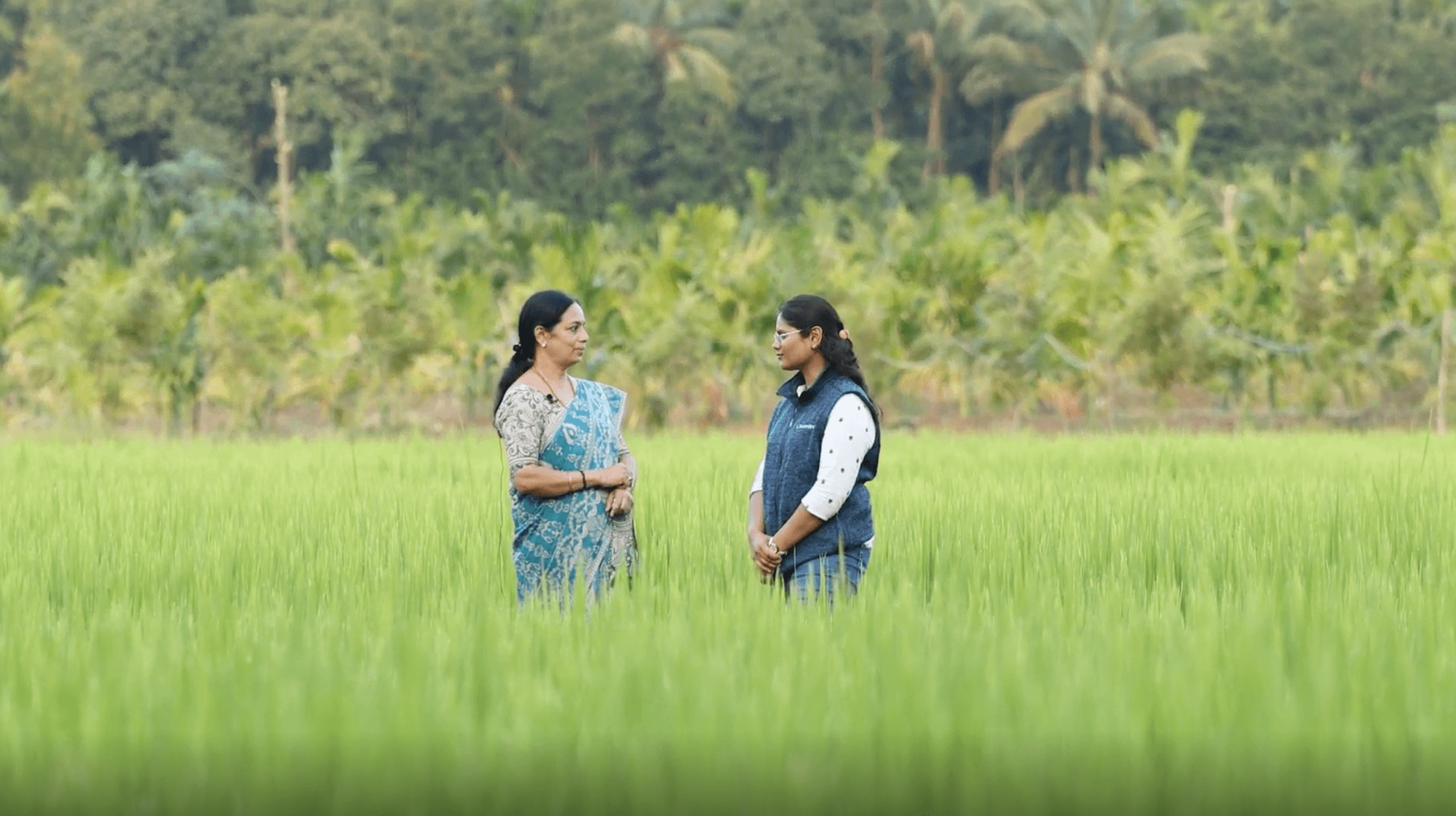
Eighteen years ago, Usha D. Jois lost her husband and, almost overnight, inherited every decision that once belonged to two people. There was no gradual apprenticeship in farming, no time to grieve or ease into the work.
"It came to me as a responsibility,” Usha told us. Yet what began as an obligation became something closer to purpose. Farming brought her “peace, satisfaction, [and] relief.” Amid a season of loss, she gained both a new way of life and the strength to “handle every challenge that came my way."
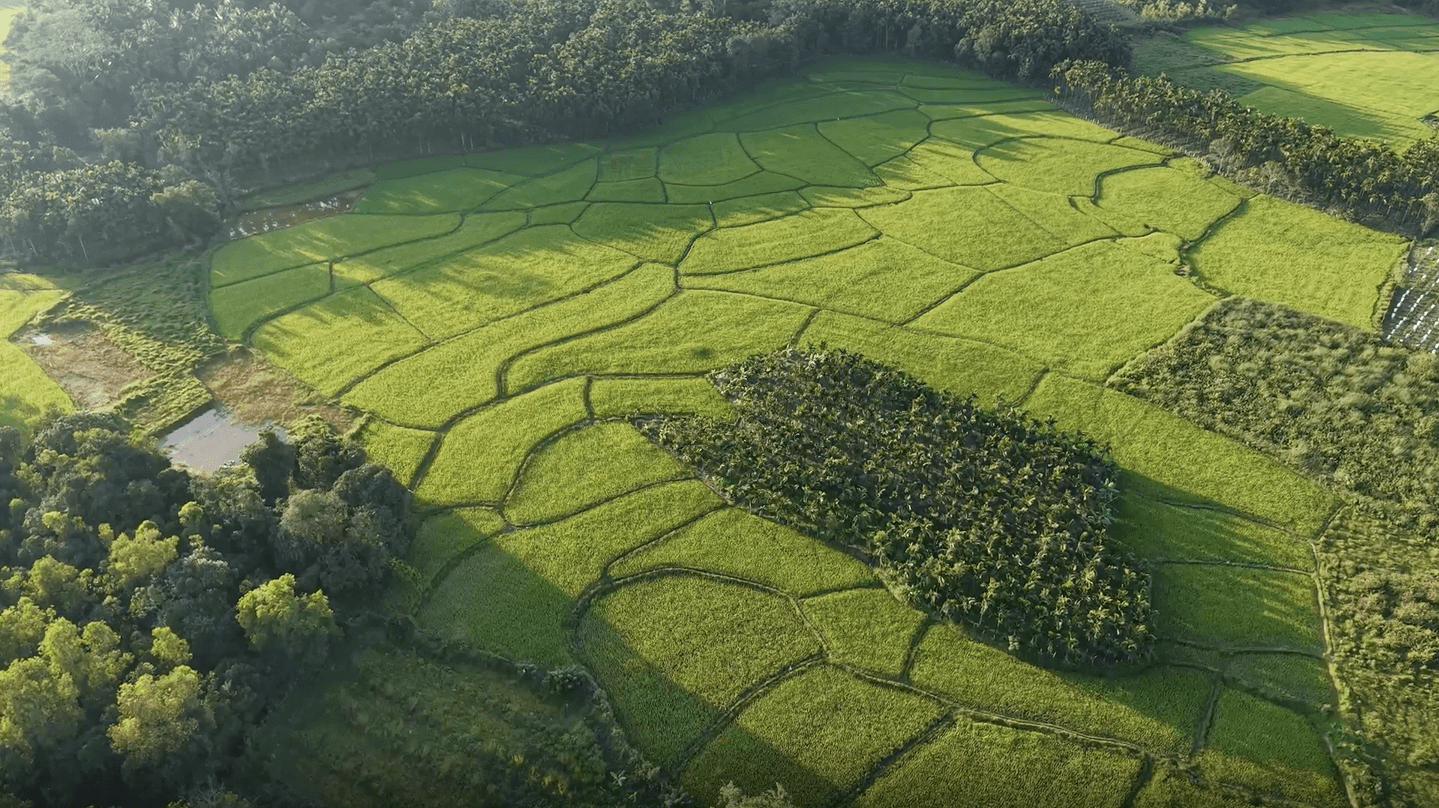
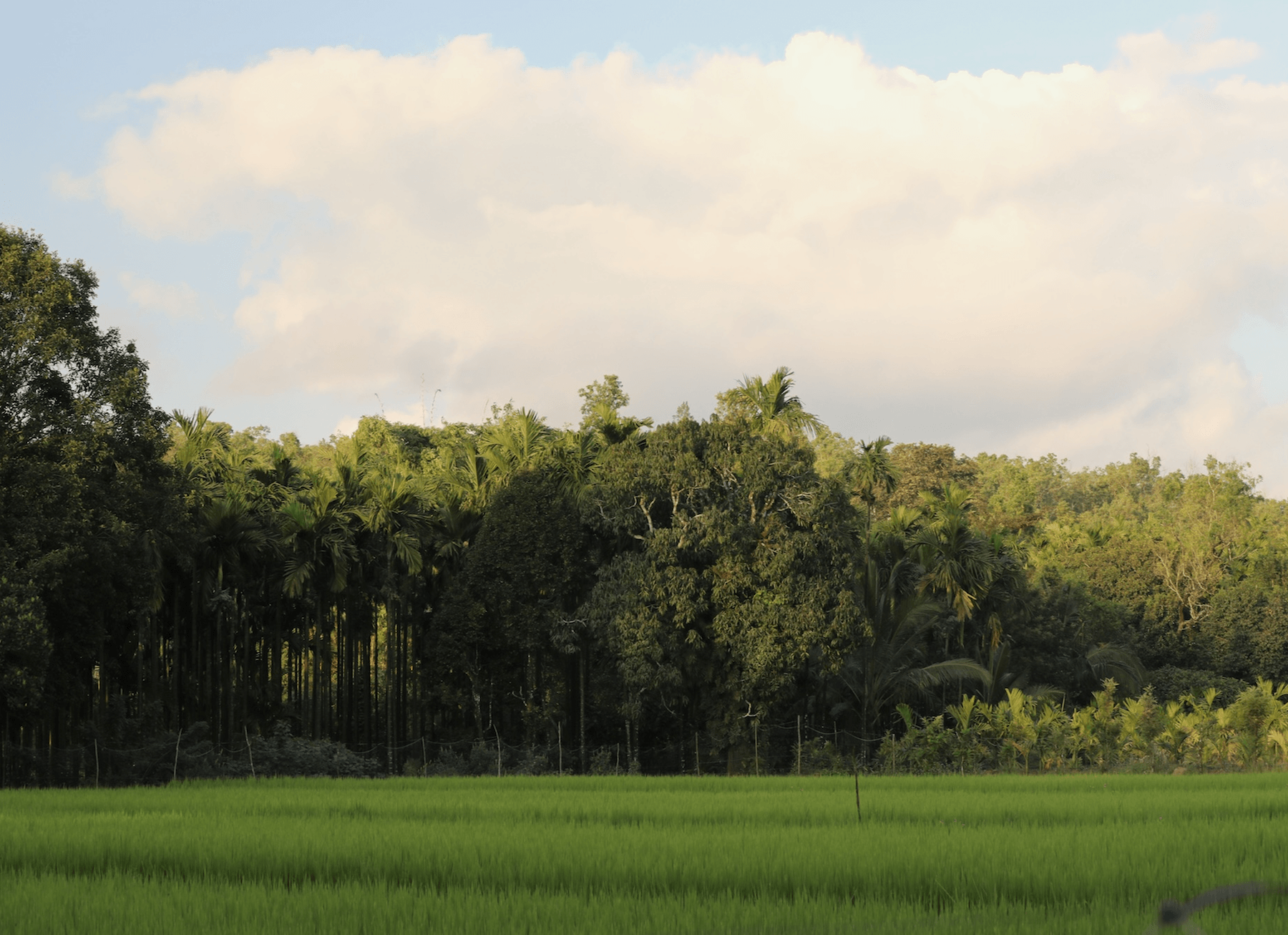
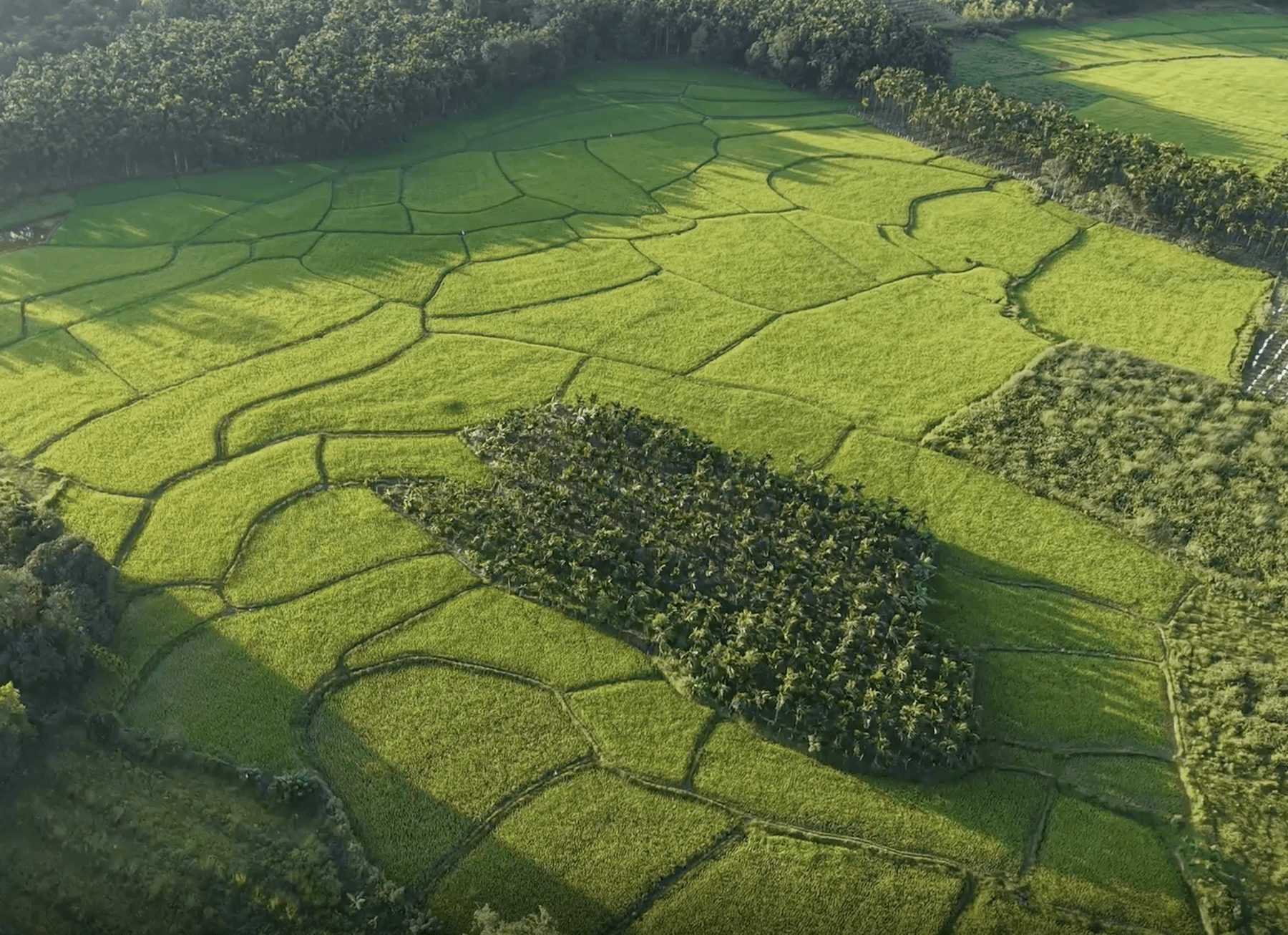
Today, Usha manages a diversified farm in Daralagoud village, growing rice, arecanut, nutmeg, cardamom, pepper, and a handful of other spice crops. Her land tells a story of renewal. Usha transitioned her farm from conventional, chemical-dependent farming to organic, regenerative practices. She felt the land was calling for something better. Before she changed course, she watched her soil lose fertility year after year, and she is direct about what conventional farming was costing her and what it costs any family that depends on the land. “Health is the most important asset in life,” she says. “You can have money, fame, and a luxury life, but if you do not have good health, life is worthless.” Continuing down the chemical path, she believes, would have left her fields lifeless within two decades.
For Usha, that realization carries a moral weight beyond her own farm. “Every farmer should have a sense of ownership for protecting the environment,” she says. “Any profession can be corrupt, but not farming. Farmers need to be honest and see how they grow their crop. If they are feeding chemicals to their land, the produce is consumed by everyone else, which is like feeding poison.”
The results came slowly at first, then became undeniable. “You can feel it when you walk in your field,” Usha says. And it isn’t just a feeling. Through active choices, she has ushered in the return of soil biodiversity. Her plants are greener and visibly healthier, and the clearest proof, she says, has been on her plate: the rice she and her family eat daily has a new earthiness and depth of flavor that simply wasn’t there before. The practical shifts have been just as real. Usha has eliminated chemical inputs entirely, relying instead on organic supplements to feed her soil. That soil now holds moisture far better than it used to, cutting down how often she needs to irrigate. Her crops have grown noticeably more resilient, better able to withstand erratic weather and pest pressure than they were under conventional management.
Usha is candid about the timeline. “Yield increment is gradual,” she says. “We cannot expect yield stability in the first three years. We need to be patient for the initial two to three years—later, it gets better.” It’s advice she offers any farmer weighing the same transition. But if you ask Usha what’s different today, she doesn’t start with numbers; she starts with daily life. “It was more about adding more chemicals, uncertain yields, and a strong sense of not eating right–with no awareness of sustainable, organic cultivation,” she says of the earlier years. “But today the scenario has changed. Dinner talks are about making the right choices now, more about agriculture, how to make the farm better. That’s the shift I can see evidently.”
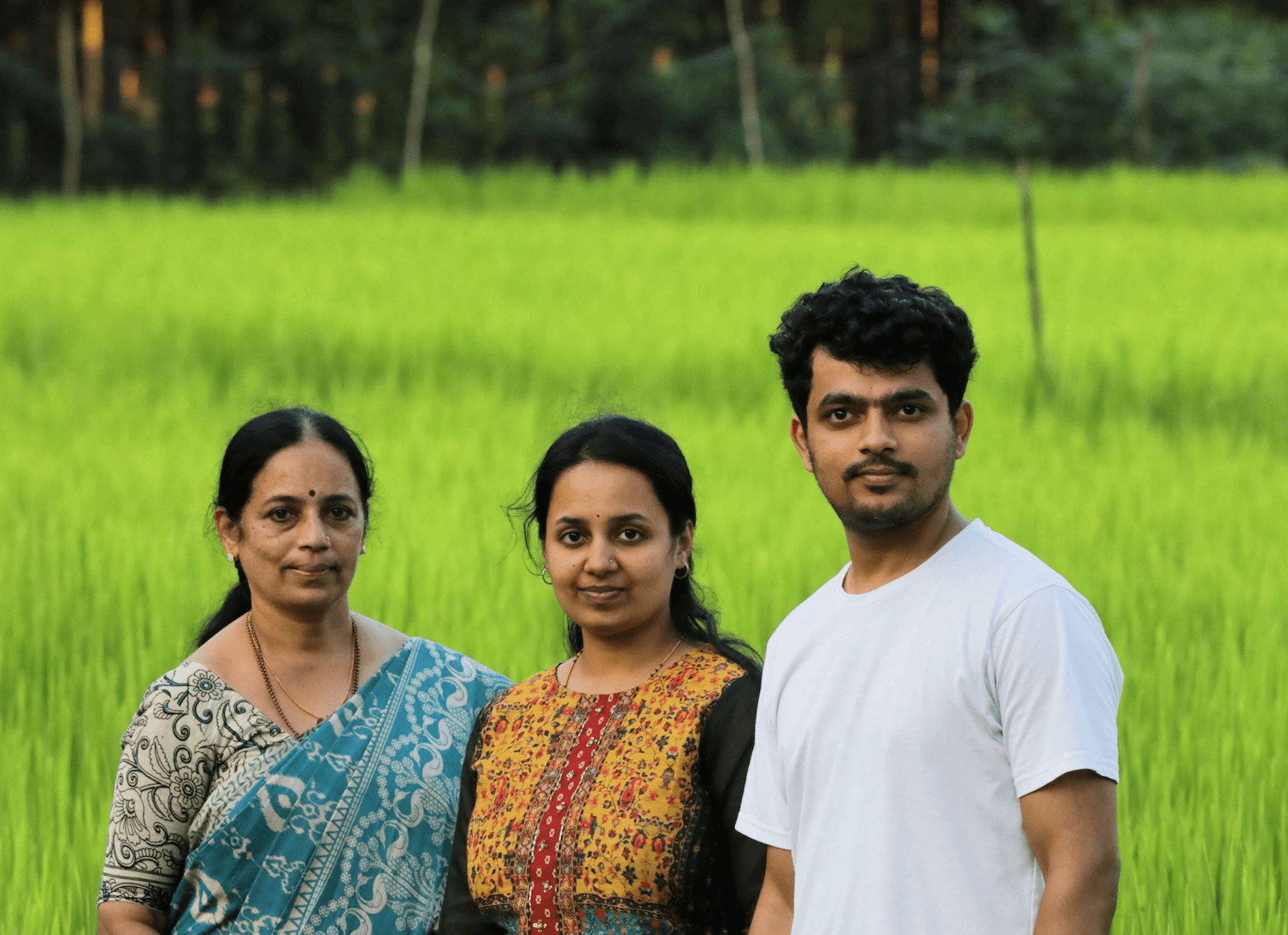
That shift extends to the next generation. Usha has two sons: Sathvik, a professor now living in the United States, and Samarth, an engineer working at Oracle. Both are married, and both grew up watching their mother rebuild the family’s land. Both want to see the farm continue after her. “My kids and grandchildren will inherit healthy soil,” she says, “and they are now aware of healthy soil, sustainable practices, and organic agriculture. They are showing interest to continue the same.” Her hope for them is that they adopt scientifically sound organic practices and, through them, a healthy life.
For Usha, partnering with Boomitra provides more than financial support. “I feel very happy to be recognized. It’s not about the money; I see it as an encouragement,” she says. “It allows me to spread my knowledge and create awareness among the farming community about good, sustainable practices. It’s a good feeling to be inspirational for others.” She sees the money as having a natural destination. “Not just me–any farmer would use the money to develop her farm,” she says. “What comes from soil should go back to it.” She’s also candid about the pull every farmer feels toward quick returns: a bigger harvest, a new asset, a more comfortable life sooner rather than later. “It’s a common feeling for all of us,” she says, “but we should not choose a path of harming the soil for our greed. We will earn more through sustainable practices, but we should have strong intent and the guts to face challenges in the initial years. Later, we can achieve whatever we want.”
Her efforts touch both the soil under her feet and the planet we call home. From her first crediting period, spanning 2021 to 2024, Usha stored 10.1 tonnes of CO₂ across her 11-acre farm. Her diligence and labor are producing positive change, and she traces her commitment to a Kannada saying she holds close: “Kayakave Kailasa,” meaning work is worship. “I should work while my body supports me,” she says. “I should never depend on others, and I strongly believe we should never let land lie fallow. I find peace and joy in agriculture. This is something I like; it keeps me pulling forward.”
Today, she cultivates her own food, her children are well settled, and she attributes the family’s health directly to what grows in her fields. Now, she says, she wants to spread that same possibility to other farmers.
Usha is one of thousands of farmers restoring soil across India. Explore the URVARA project on Boomitra’s virtual tour.


EMPRESA
SOLUCIÓN CLIMÁTICA

Al optar por participar, aceptas nuestra Política de privacidad